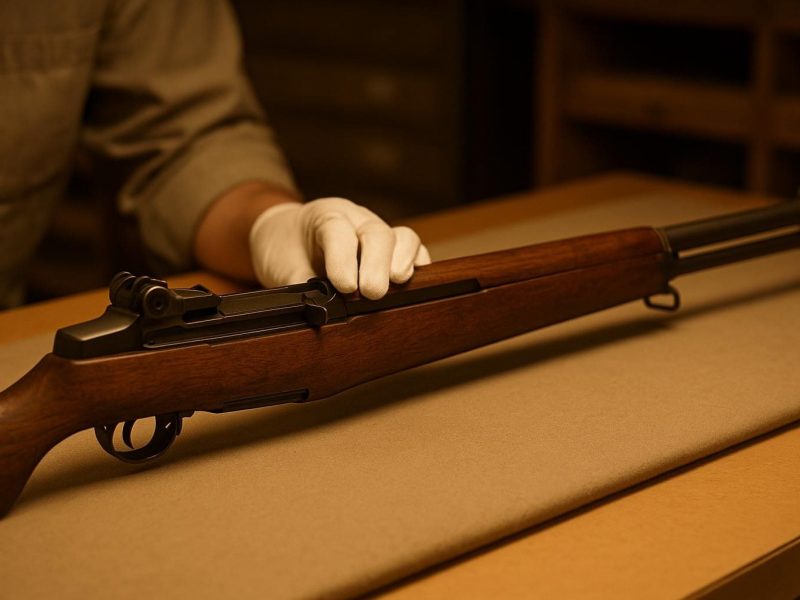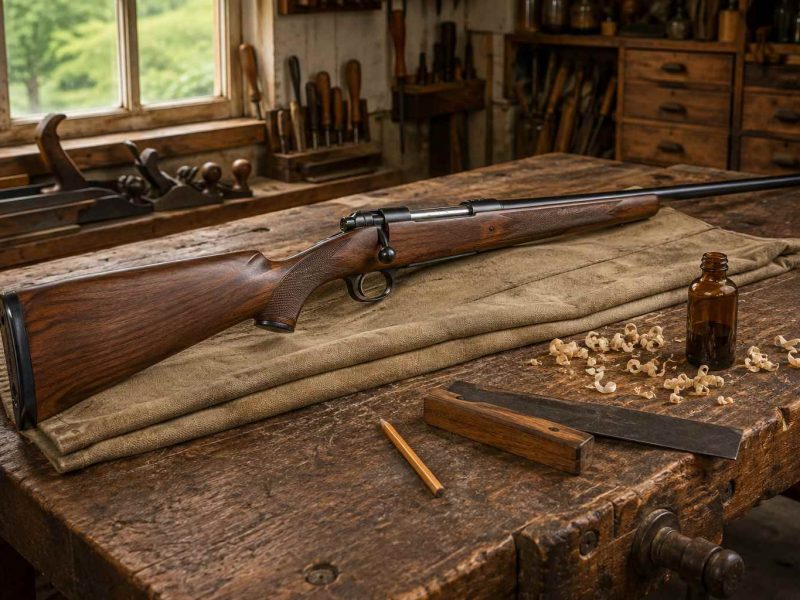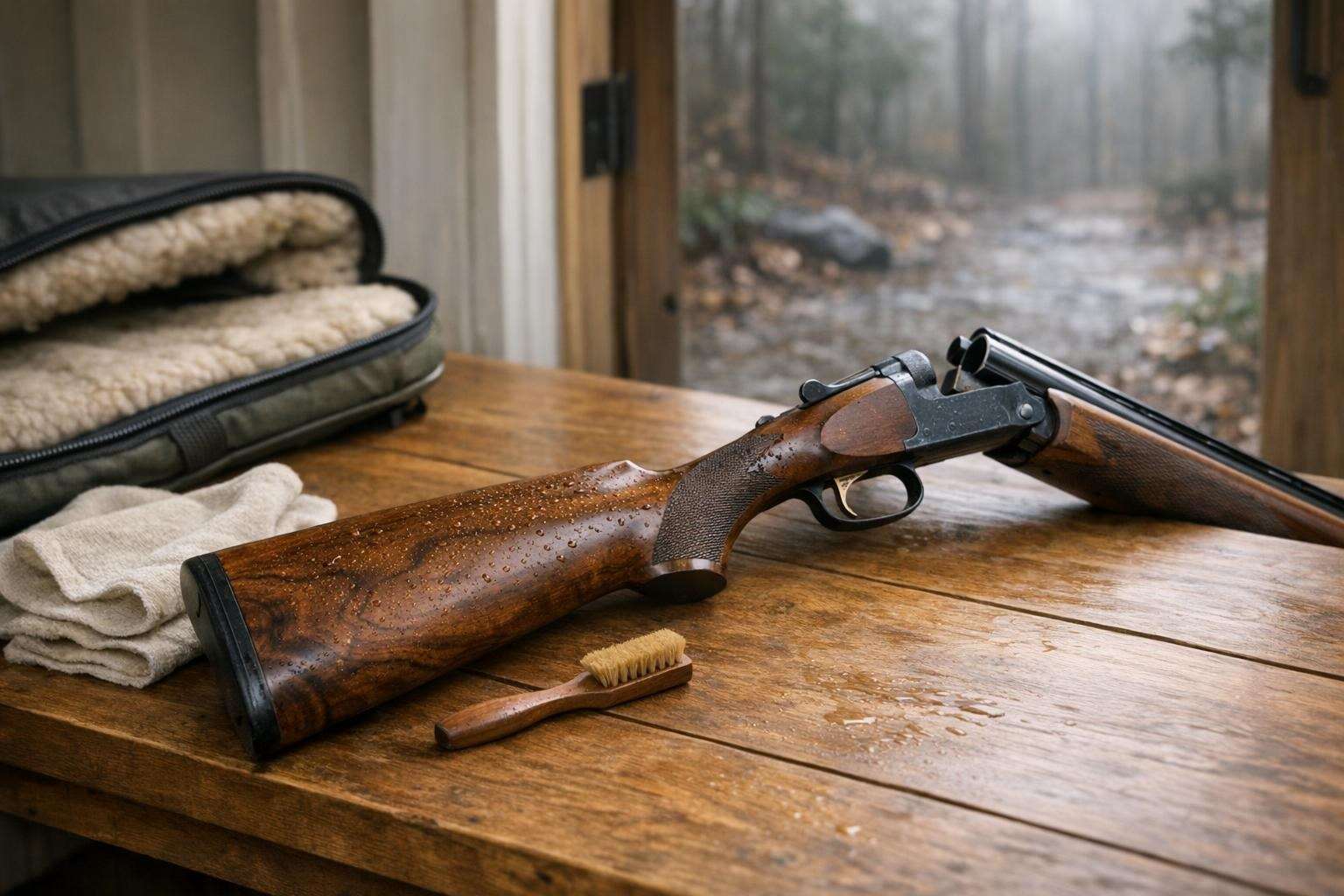
A firearm, which is left outside on a wet day, can develop raised grain, dull areas, loose joints or even fine finish damage after a short period of time. While the rain alone can cause such problems, it is often the subsequent and abrupt change in temperature and/or humidity that can have the most serious consequences for your stock once it is returned to a dry, heated room and then sealed away in a case.
Now that we have explored some basics of wood stock maintenance, remember the four practical changes to ensure the best possible care for your treasured stock: treat your stock as a changing material; replace heat with patience; learn to read the finish on your stock; and treat storage with same respect and care as rest of the maintenance.
The first change: wood is a working material, not a fixed shell
Just because your stock looks solid does not mean it is dimensionally stable. That your firearm's stock is made of wood means that it will absorb and release moisture of varying amounts. The end grain and any inletting, checkering or that surrounds metal work will have more edges and crevices than a smooth finished surface. Therefore these regions need special attention.
Don't mistakenly convert a minor wetting into a concentrated moisture problem. The moisture from surface wetting will slowly evaporate. Open up the firearm for drying as appropriate and remove any tight covers that may have collected condensation from the firearm. Do not necessarily open up the action; that will depend on the specific firearm and your confidence in its disassembly for drying.
Always refer to the firearm's manual for correct disassembly and always seek the advice of a qualified gunsmith should any moisture penetrate to areas which cannot be safely inspected. Do not attempt to force open a part, nor use any unauthorized tools to try and clean up any ingress of moisture.
The second change: slow drying replaced the old instinct for quick heat
Slowly letting a gunstock dry out is more important than quickly drying it out with heat. Using a hair dryer or a heat gun to dry out a wet finish quickly can cause more problems than it solves. Uneven drying of a stock can place unusual stress on a stock's joints and finish, even causing small cracks in thin areas of the stock. Furthermore, problems that may have gone unnoticed in the first place can become more apparent after having been subjected to heat.
Don't dry your stock too quickly, let it dry slowly in normal, non-extreme temperatures. Open up the fore-end, action and stock as required to permit airflow through the stock. Keep the stock away from all heat sources, including hair dryers and heat guns. The transition from wet to dry will cause uneven drying of the stock surface and possibly severe damage to the joints, if left too long.
There is a time for drying a gunstock out and this must be allowed. The worst damage occurs when the outer surfaces of a stock are dried out before the interior. To inspect a stock for drying out, look for it to return to its original dimensions. If it has developed any raised grain then this must be gently sanded off.
The third change: the finish became a surface to identify, not a problem to cover
Most older guns have surfaces covered with various finishes, some of which date from the gun's original production while others have been applied at a later date. So what was originally a rubbed oil finish, for example, could well have been varnished, covered with a lacquer or even partly worn away. Consequently two seemingly similar wooden gunstocks could well respond differently to the application of various surface cleaners followed by different finishes.
But it does mean to be extremely cautious about any surface cleaning of the wooden parts of a gunstock. The Finish on a wooden stock is a surface, and that surface can be to identify a stock for repairs and for historic purposes. It is best to clean a gunstock with a soft cloth, damp but not wet. No solvents, no abrasive pads. Anything more than that is to commit to a restoration of the surface of the stock's wooden parts.
Do not treat whitening, peeling or cracking, or sticky or darker areas by treating them with oil. The problem with the finish, or with the moisture that caused the problem in the first place, will likely be covered up. A collectible or antique firearm is better off with the natural finish, deteriorated in some places, than with a uniform glossy finish created by oils or finishes applied to try to correct surface problems.
Walnut preservation depends on knowing when to leave it alone
Just because the Walnut has a beautiful figure does not mean that you should rub it excessively or re-wet the same area over and over. It is also wise to avoid untested cleaning and drying methods as they can cause the surface to change in appearance thereby making future conservation difficult to implement.
Assuming no damage to your stock, then a simple dry inspection for raised grain along edges of the stock, any alteration to buttpads or recoil pads, any movement around the triggerguard/wrist area, and any sticky (tacky) areas on the surface of the stock are all that is required. Checkering on stocks should be gently brushed with a soft dry brush and no wax or oil applied.
Bear in mind when applying any finish to a walnut stock that you must ensure that it will not conflict with the finish currently on the stock. If you're unsure about anything, it's always best to seek the advice of a qualified conservator or gunsmith experienced in the conservation of firearms and their wood finishes. Even small mistakes with a finish can be very difficult to reverse, and will likely reveal more problems than you started with.
The fourth change: storage became part of the maintenance cycle
Storing a firearm after it has been cleaned begins with the cloth that was used for cleaning the gun. The case that you store your firearm in can retain moisture on the stock and hold it against the metal of the firearm. Once you bring the firearm into a warm building after being in cold weather it can take some time for the stock to dry completely. It is best to allow the case to air out as well as the stock and then store the firearm in a clean, dry location.
Do not put your cleaned firearms in their cases for too long after they have been cleaned and dried for a damp trip. Let the case dry out separately. Store your unloaded, cleaned firearms in a clean, dry, storage location. Ensure that you are storing your firearms in accordance with the laws of your location and in accordance with the instructions of the firearm's manufacturer for storage of secured firearms. Store your ammunition separately to your firearms when required and appropriate.
Generally do not put a damp firearm in a plastic bag to dry it out and do not store it against an outside wall in cold weather. Once your stock and metal have dried according to your firearm's manual, store it in the best environment for it, to get the most from your firearm. The better storage of your fire arms the better for their upkeep, and for your collection of them.
When a damp day becomes a conservation question
What would seem to require more than simple wiping down and drying out after a damp outing – i.e. cleaning out, possibly repair of swelling etc. – are signs of moisture penetrating into the stock or the gun's parts: e.g. excessive swelling; a joint separating; parts becoming loose and shifting about; finish starting to lift off; unpleasant odors; signs of moisture having penetrated within the stock etc. Then a proper assessment as to what is required is called for, not mere experiment.
Damp weather can cause problems to historic arms. It may seem like a good idea to 'do something' about minor problems but, removing an original finish, flattening a raised grain or filling checkering can mean removing evidence of age and workmanship that cannot be replicated. Good care of historic arms is not always about active cleaning, sometimes it is about nothing at all.
Controlling changes in the fire arm to care for it is of utmost importance. Cleaning, drying, recognizing a finish, and storing are steps to care for a fire arm. A working stock and a beautiful piece of walnut, such as on a Collectors Gun, are to be protected from any damage.