Understanding the M1 Garand: Insights from Its Stock and Barrel
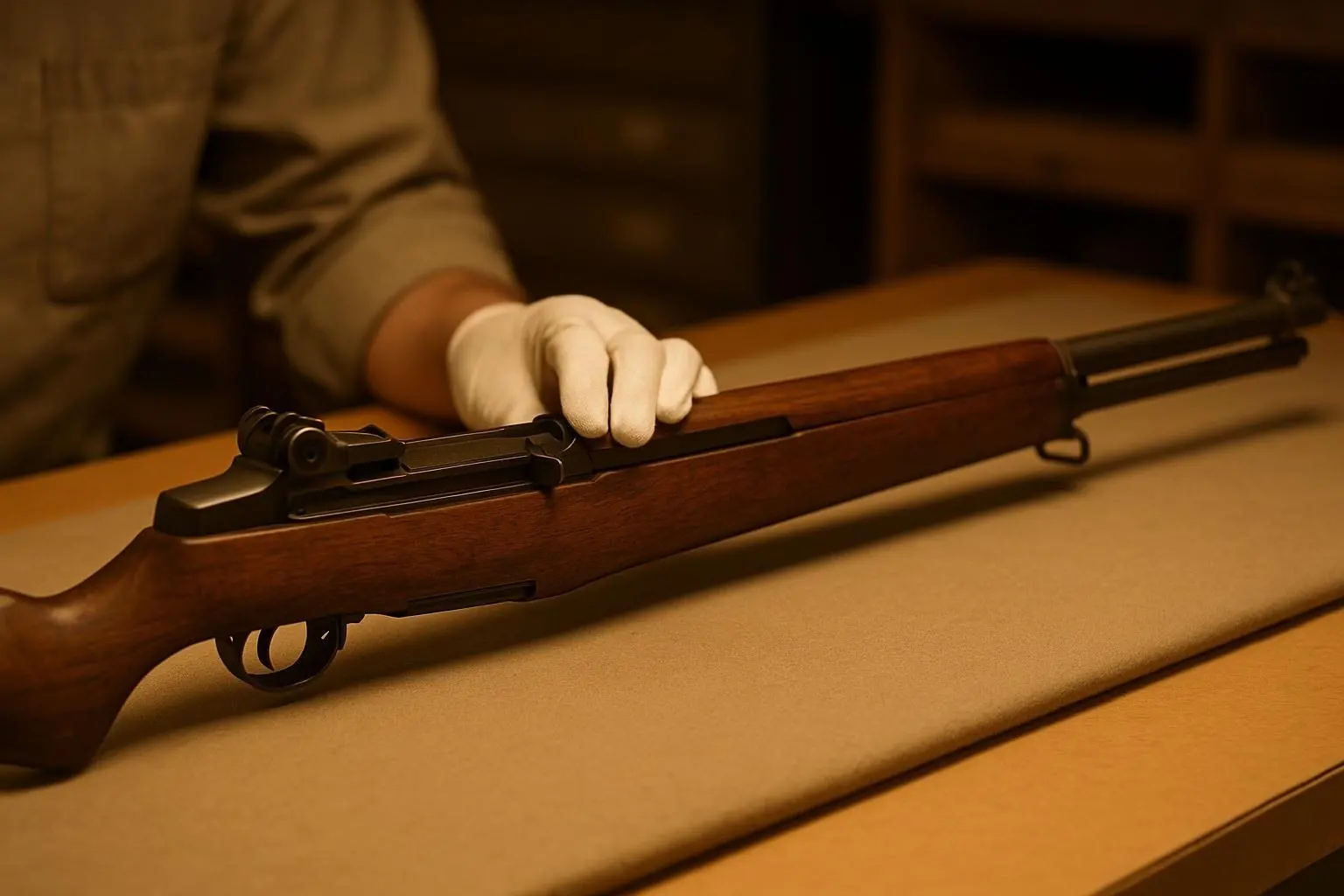
The M1 Garand, adopted by the U.S. Army in 1936 was a change in military rifle design moving from the manually operated M1903 Springfield to a more advanced self-loading service rifle. This change was not about adding a new firing mechanism; it required a complete redesign of important parts, including the receiver, operating parts, barrel and the famous walnut stock. Each of these parts has information about the rifles past especially when looking at a real example today.
The Functional Design of the M1 Garand
The need for a service rifle made military planners look for a design that had self-loading features along with the strength and handling that people expected from a full-sized rifle. John C. Garands clever idea used a gas-operated action and a fixed internal magazine that held an eight-round en bloc clip.
This system directly affected the design of the stock. The stock needs to offer a connection for the receiver and trigger group while allowing the inside parts to work smoothly. So the stock is very important for how the weapon works-not a pretty piece made of wood. When looking at a stock it's important to check how it fits and how well it works in the environment the rifle is used in. A stock might not have markings but could still work as a replacement. These points show how important it is to have materials and parts that fit together properly.
The Barrel: A Part That Can Be Changed
Even though it might not seem like it the barrel of a service rifle like the M1 Garand is considered a part that can be replaced because it wears out from using ammunition, cleaning and heat. The military had a way of thinking that saw barrels as parts that could be swapped when needed, not as parts that made the rifle unique.
An M1 Garand might have barrel markings from times and these differences don't automatically mean the whole rifle is a copy. Checking the markings has to happen in the picture of the weapons overall look, finish and known history. If the barrel has been changed it's very important that it was installed right keeping the timing and headspace best done by a skilled gunsmith using the right tools. Anyone buying this rifle should be careful. Get a professional check before shooting it if the barrels background is unclear.
What the Stock Can Tell You
The stock can show a lot about how the rifle was used over time. Marks like dents compressed areas around screws or repairs can show that it was handled a lot or fixed before. But appearances can be tricky; a clean stock might mean it was replaced or kept carefully not that it's original while a damaged stock might just show use.
How the stock fits is more important than how it looks on the outside. It's important to check for any problems like cracks near the receiver any parts or wood that is coming apart. The handguards and other parts should not be seen as proof of the rifles history. Instead focus on what the stock can prove about how the rifle was used and how that can be understood, not just what it looks like.
Looking at the M1 Garand as a Whole
To really understand the M1 Garand you have to look at all parts the receiver is the most important part to check followed by the barrel and stock. Of trying to put every part into a specific time the goal should be to find any differences and understand the story behind any changes.
Keeping records is very important. Take pictures of any barrel markings and repairs before you clean the rifle making sure you note what you see without any guesses. Statements like "the barrel marking looks newer than the receiver" should be trusted more than claims about parts not matching, especially without proof. Always keep any history of the rifle. Make sure current checks come first.
Understanding the Condition and Getting Help
Knowing that wood and metal age differently is part of the check. A rifle might have a metal part and a broken stock or the other way around. The way the rifle looks might help ask questions but should not be the answer.
Taking the rifle apart or doing checks like checking headspace should be done by professionals when you don't have the right skills or tools. As rules and best practices change make sure to know the rules and local laws when it comes to handling guns.
In the end the stock and barrel of the M1 Garand are not parts but important pieces of history that tell their own story. When looked at with the rest of the rifles parts they show a history connecting the past, with how it is used now recognizing both the skill and the history of this famous gun.