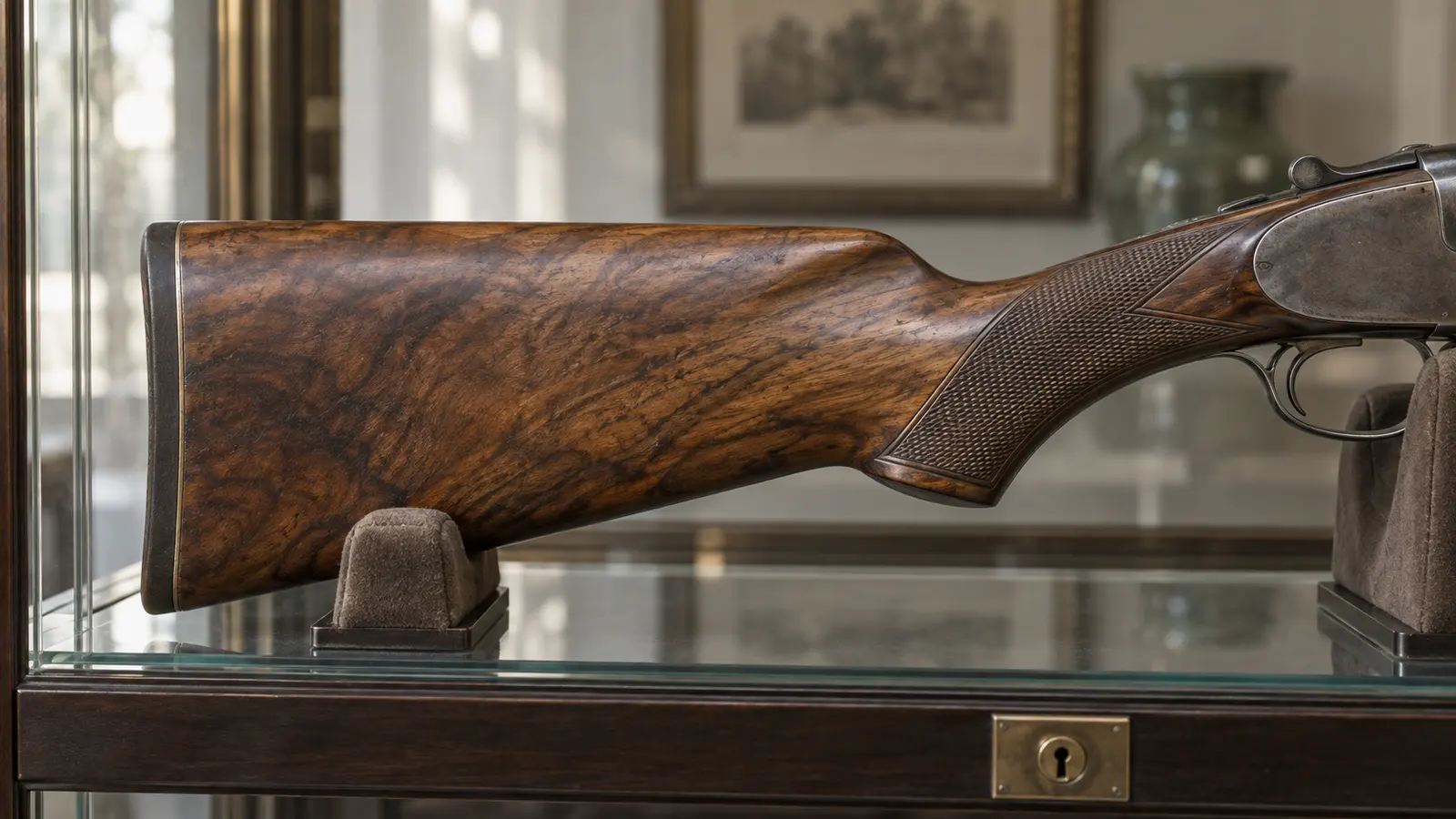
An older walnut stock can hold a lot of information in a small area. There might be wear around the grip, a change in colour where the wood was protected or a repaired mark that is part of the object’s story. A surface that looks shiny and new is not always better. Before you reach for any product take a moment to think about what you're trying to keep.
This guide is about ownership and making smart choices about conservation. It is not meant to give instructions on fixing a firearm. If you have questions about safety, condition or use speak to a qualified gunsmith. A historic piece might also need an expert assessment from a conservator. The advice here focuses on observing, planning storage, recording details and understanding when a minor-looking improvement could lead to something permanent.
Start with a description, not a fix
Put aside the idea of how the stock should look. Focus on how it actually looks. Take note of the colour the existing finish, areas where the wood shows signs of use and any marks you can see without taking the firearm apart. Use words like "a light spot near the butt" rather than jumping to conclusions like "water damage" unless you are sure of the cause.
Photographs help a lot when they stay consistent. Include both an overall shot and close-ups of the same spots under the same lighting. Keep the image files—don’t rely only on low-quality versions sent through messaging apps. A photo made to record condition should make a feature easier to see not hide it behind shadows, filters or glare.
Write down when you got the item and what care it has had since. Be clear about which details came from a previous owner and which you checked yourself. If you don’t know the finish say so. A specialist can work with a missing detail. If you present a false assumption as fact it might lead an expert astray.
Distinguish age from a developing problem
A mark that has stayed the same for years raises a different issue than a surface that is just starting to lift or lose material. Neither of these should be judged with a quick look. Take a look at pictures and compare them with older ones to see what has really changed. Don't try to rub an area to see if it will get clean because that test could actually take away material.
The difference is important because owners sometimes think they need to make an old object look completely new. Uneven colour can be part of its story. That doesn't mean every problem should be ignored or that being old automatically makes a broken part okay to use. It means that looks and safety need checks done by people who know what they are doing.
If you see a crack, movement, powdery marks or a change near the place where wood and metal meet stop regular handling and get help. Describe what you saw without trying to make it happen again by moving or pressing the material. Bring the pictures and the care record to the meeting. A clear explanation is better than a home fix that has made the real issue harder to see.
Pay attention to the storage environment
The Canadian Conservation Institute says that wood reacts to moisture in the air getting bigger or smaller as conditions change. Their advice points out that rough handling and the environment are reasons wooden items get damaged. The National Park Service also sees controlling the environment, cleaning and careful handling as parts of keeping things safe. These principles provide context, but they do not replace the firearm manufacturer’s storage instructions.
Think about where something is instead of just what the room is called. A cabinet next to a heater a wall that gets cold in the winter or a room that changes a lot with the seasons might need closer attention. Follow the firearm and storage equipment manufacturers’ guidance. Ask a qualified specialist about unusual or historic materials. Don't just use a museum’s humidity target without thinking about the item and its existing condition.
Keeping a note about the conditions can help you talk to someone who knows more. Write down when the heat changes, when the room feels too wet and when something new worries you. Don't try to fix every number you see. The point of checking is to understand the pattern not to keep changing things just to reach a number from somewhere online.
Keep care products from turning into tests
Products sold for household furniture are not automatically suitable for a gunstock finish. Just because something says natural doesn't mean it's right. A suggestion that worked on something might not work if the finish, previous repairs or decorative materials are different. Keep the bottle and directions for any product a qualified professional suggests so you can track what happened later.
The National Park Service’s guidance on waxing wooden objects illustrates why identifying the surface matters. A treatment suitable for some finished surfaces is not necessarily suitable for unfinished wood. That guidance is not a recommendation to wax every gunstock. If you cannot identify the finish, waiting for an assessment is a deliberate conservation choice.
Don't use a hidden spot as a chance to try something. Damage in a hidden spot is still damage. Some problems might not show up right away. Don't take a bottle without a label or mix products just because they sound like they might work together. If a previous owner applied an unknown substance, record that uncertainty rather than trying to remove it by guesswork.
Make handling deliberate and infrequent
Before moving a firearm follow the safe handling procedures and the rules of the location. If you are not able to assess the firearm’s condition, ask a qualified person to do the assessment. Conservation ideas never replace firearm safety. Even a firearm that is for display still needs secure storage and a proper assessment for the firearm and for the people who may have access to the firearm.
For the conservation side of the task plan the movement of the firearm before the movement starts. Clear the destination area remove objects that might be knocked over and avoid juggling a camera or telephone at the same time. Use supports and display materials that are chosen for the firearm not improvised contact surfaces chosen only because they look soft. Seek advice when the appropriate material is uncertain.
Repeatedly bringing a firearm out to show visitors creates more chances for an accident than a planned viewing. Consider whether good photographs will answer a question about the firearm without another handling session. When a close examination of the firearm is necessary make the examination purposeful and supervised. The firearm does not become better understood simply because it has passed through more hands.
Give a specialist a brief
Explain what you want before requesting work on the firearm. Preserving an existing finish investigating a change and preparing the firearm for possible use are different tasks. Ask which professional is suited to each question. A gunsmith may address concerns about the firearm while a conservator may be needed to assess historically significant surfaces or materials of the firearm. Some cases require both forms of expertise.
Ask for a written description of the proposed work on the firearm including what material would be added or removed and what uncertainties remain. Discuss the effect on existing markings and previous repairs of the firearm. Keep estimates, photographs and treatment records afterward. When a decision is to leave the surface of the firearm alone recording why that decision was made gives the next owner something useful.
An older walnut stock does not have to become a restoration project just because it appears older than the metal around it. Good care can be much gentler: providing suitable storage, observing changes, limiting unnecessary handling and seeking professional advice when needed. These habits help preserve its look while making it easier to spot any real problems that actually need fixing.